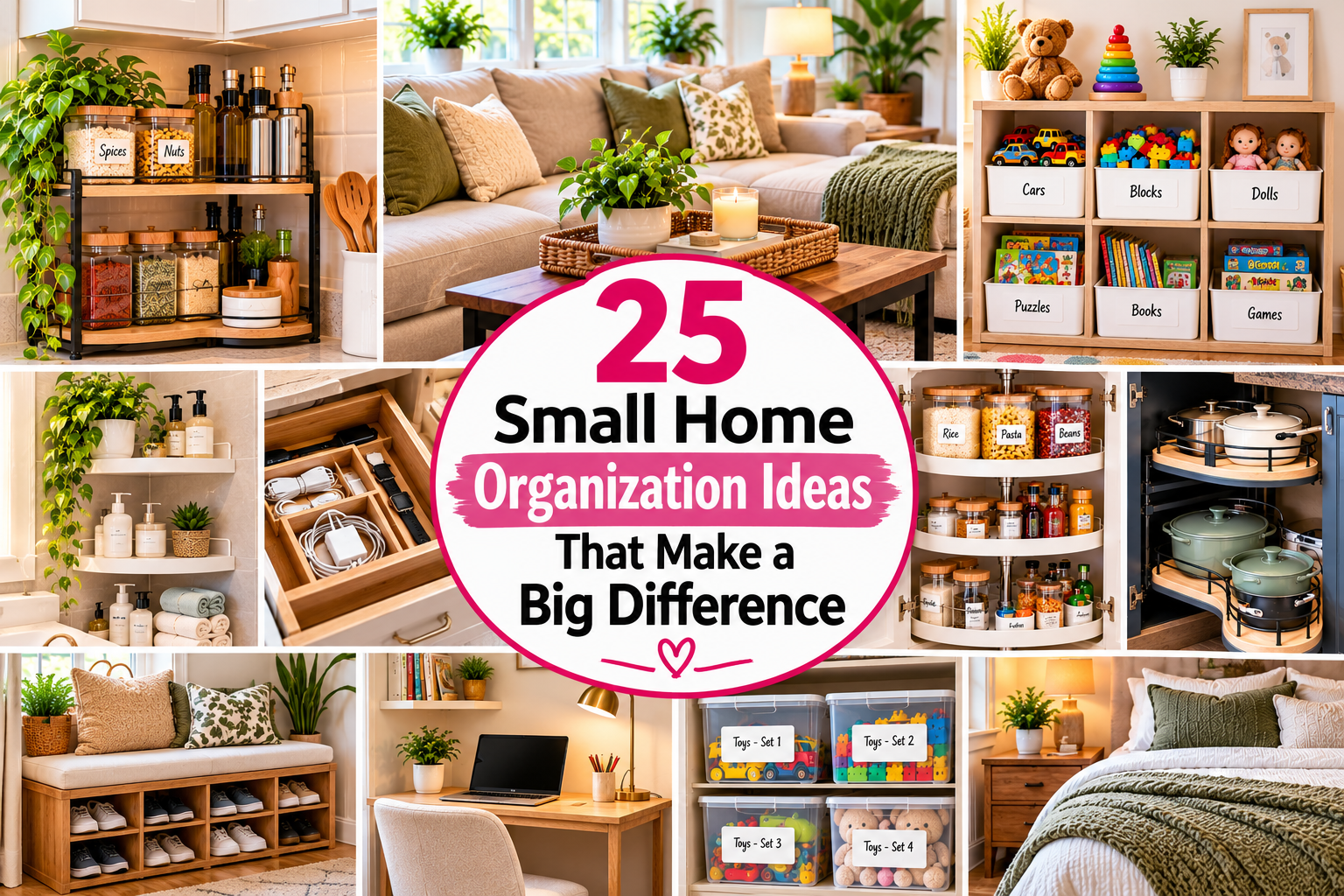
A small home can be comfortable, beautiful, and organized—you just need to make the most of the space you have.
When every room has limited storage, clutter can build up quickly. The good news is that you don’t need a huge renovation or an expensive makeover to create a more organized home. A few clever storage solutions and simple habits can make a noticeable difference.
Whether you live in a small apartment, townhouse, condo, or simply have a few cramped rooms, these small home organization ideas can help you use your space more efficiently.
1. Use the Space Behind Doors

Doors provide valuable storage space that is often overlooked. Add an over-the-door organizer to a bedroom, bathroom, pantry, or closet.
You can use one to store cleaning supplies, toiletries, accessories, shoes, or other small items that tend to create clutter.
2. Make Use of Vertical Space
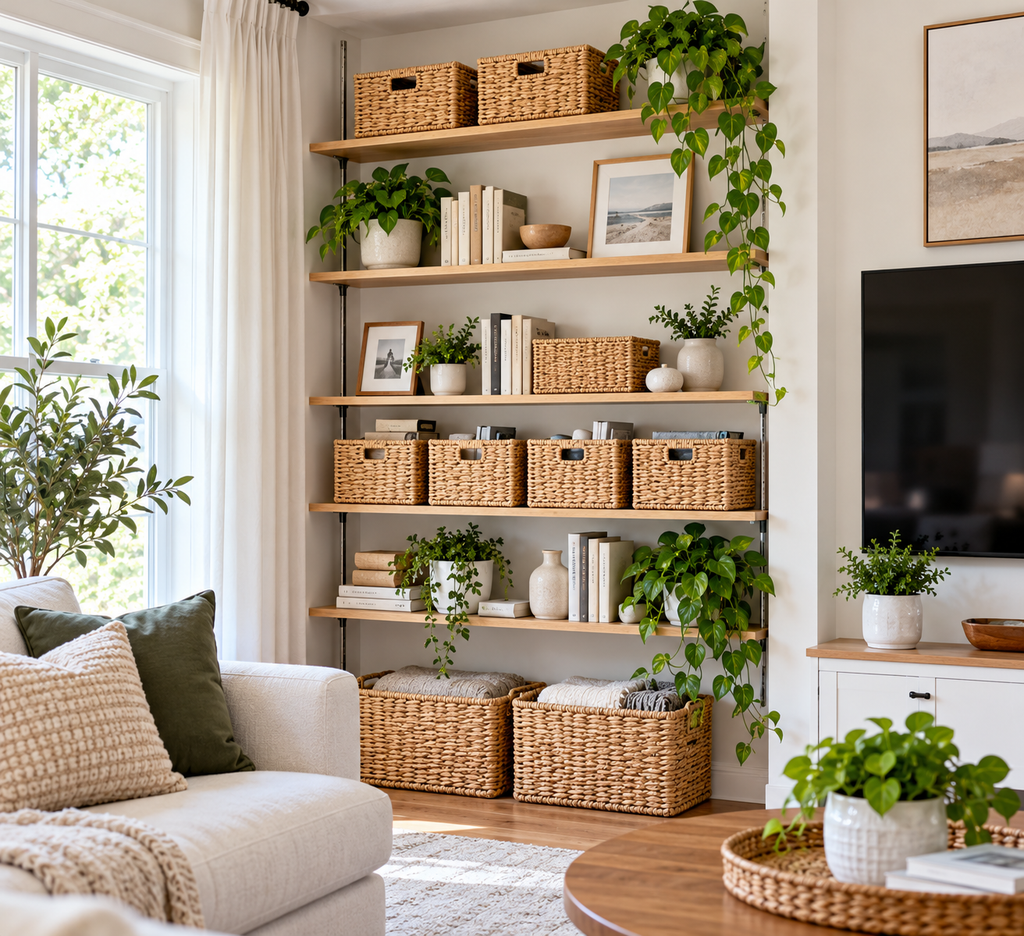
When floor space is limited, look up.
Tall bookcases, shelving units, wall-mounted shelves, and hanging organizers can give you additional storage without taking up much floor space.
Vertical storage is particularly useful in small kitchens, bathrooms, bedrooms, and entryways.
3. Organize Your Pantry With Clear Containers
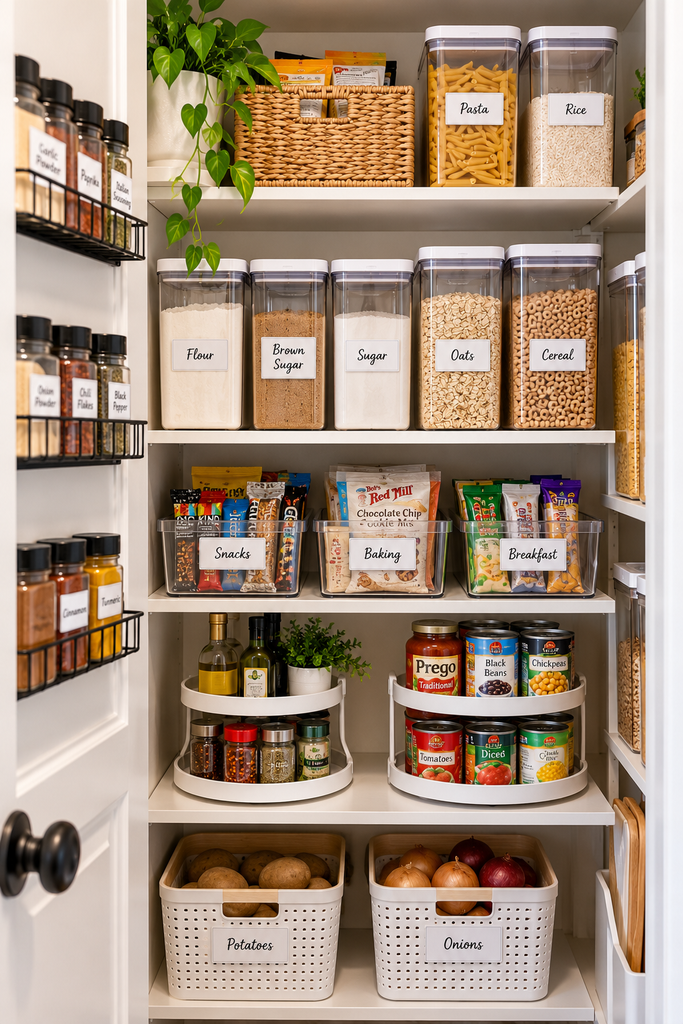
If you have a small pantry, clear containers can make it much easier to see what you already have.
Transfer frequently used dry foods such as pasta, rice, cereal, flour, and snacks into matching containers. Labeling them can make the system even easier to maintain.
4. Add Shelf Risers to Kitchen Cabinets
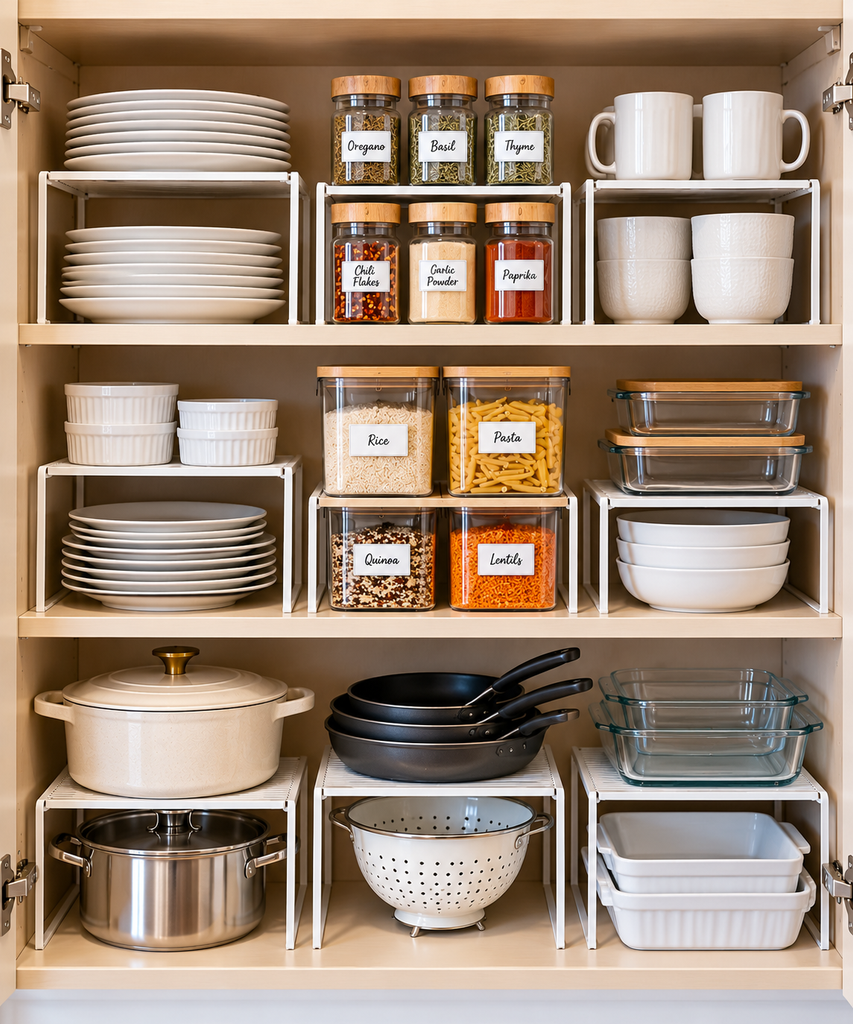
Small cabinets can become difficult to use when items are stacked on top of one another.
Shelf risers create an extra level inside the cabinet, letting you use vertical space.
They’re especially useful for plates, mugs, cans, bowls, and smaller kitchen items.
5. Use Baskets to Hide Everyday Clutter
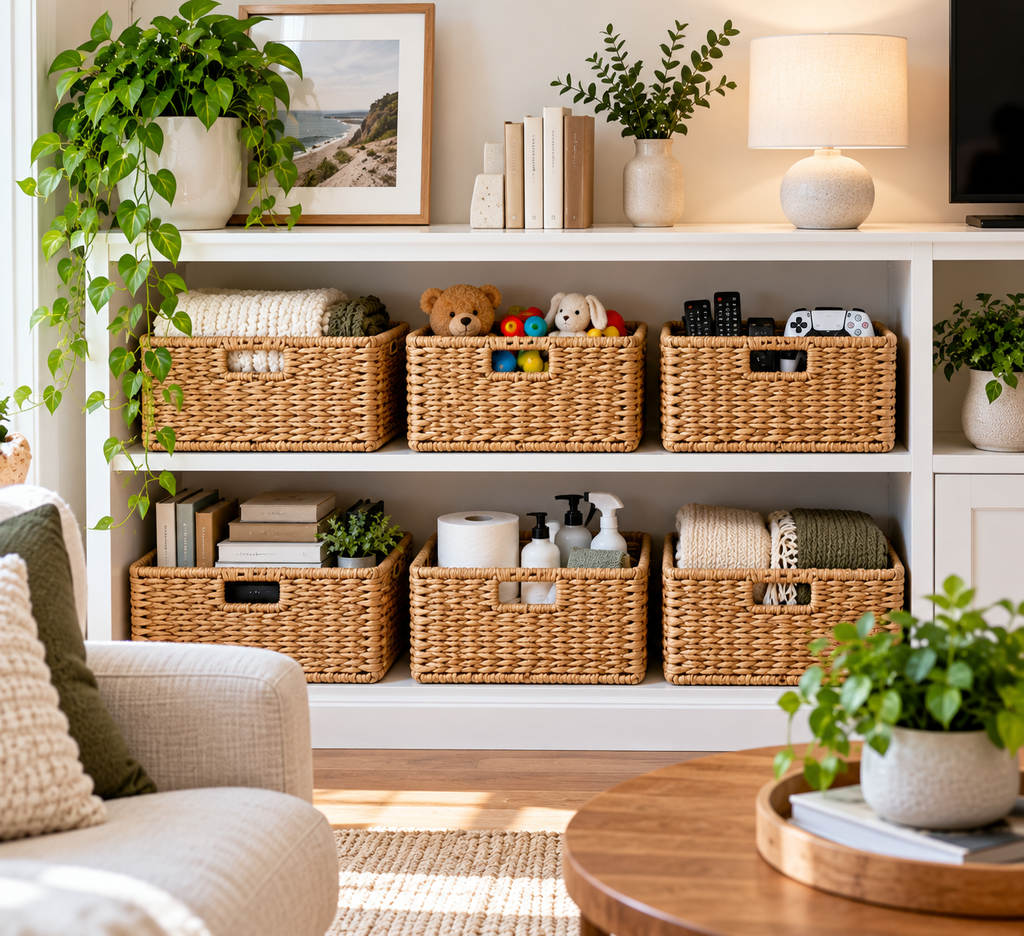
Baskets are an easy way to make open shelves look tidier.
Use them for blankets, children’s toys, electronics, books, toiletries, or miscellaneous items that don’t have a dedicated storage location.
Choose baskets that fit your shelves so that they look intentional rather than crowded.
6. Create a Drop Zone Near the Entryway
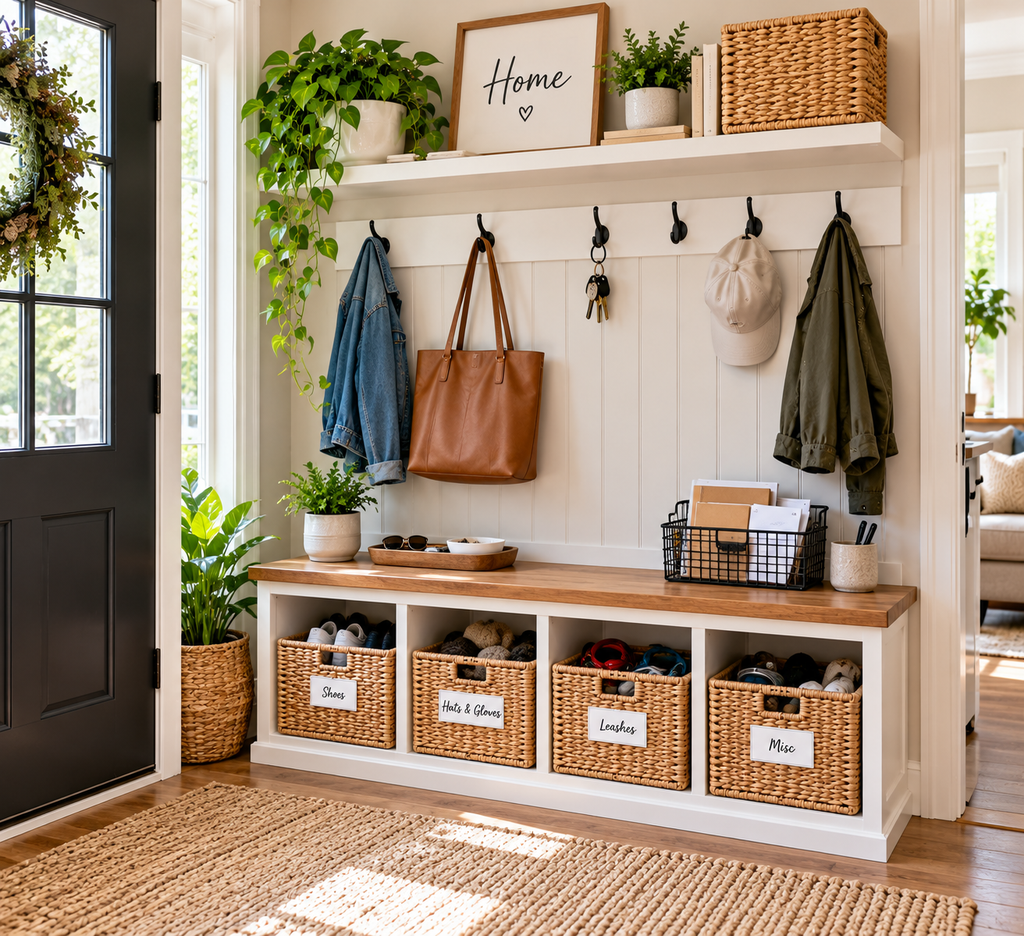
Give frequently used items a designated place near the entrance.
A small basket, wall hooks, shelf, or narrow console can hold keys, bags, sunglasses, mail, and other items you normally drop when you walk through the door.
A simple drop zone can prevent clutter from spreading throughout the house.
7. Use Under-Bed Storage

The space underneath your bed can provide surprisingly useful storage.
Use shallow storage boxes or containers for seasonal clothing, extra bedding, shoes, luggage, or other items you don’t need every day.
If you’re buying storage containers, measure the available space first.
8. Try a Slim Rolling Cart

A narrow rolling cart can fit into spaces that would otherwise be wasted.
Use one in the kitchen for spices and cooking supplies, in the bathroom for toiletries, or in a laundry area for cleaning supplies.
Because it can be moved easily, it’s especially useful in small homes.
9. Declutter Before Buying More Storage
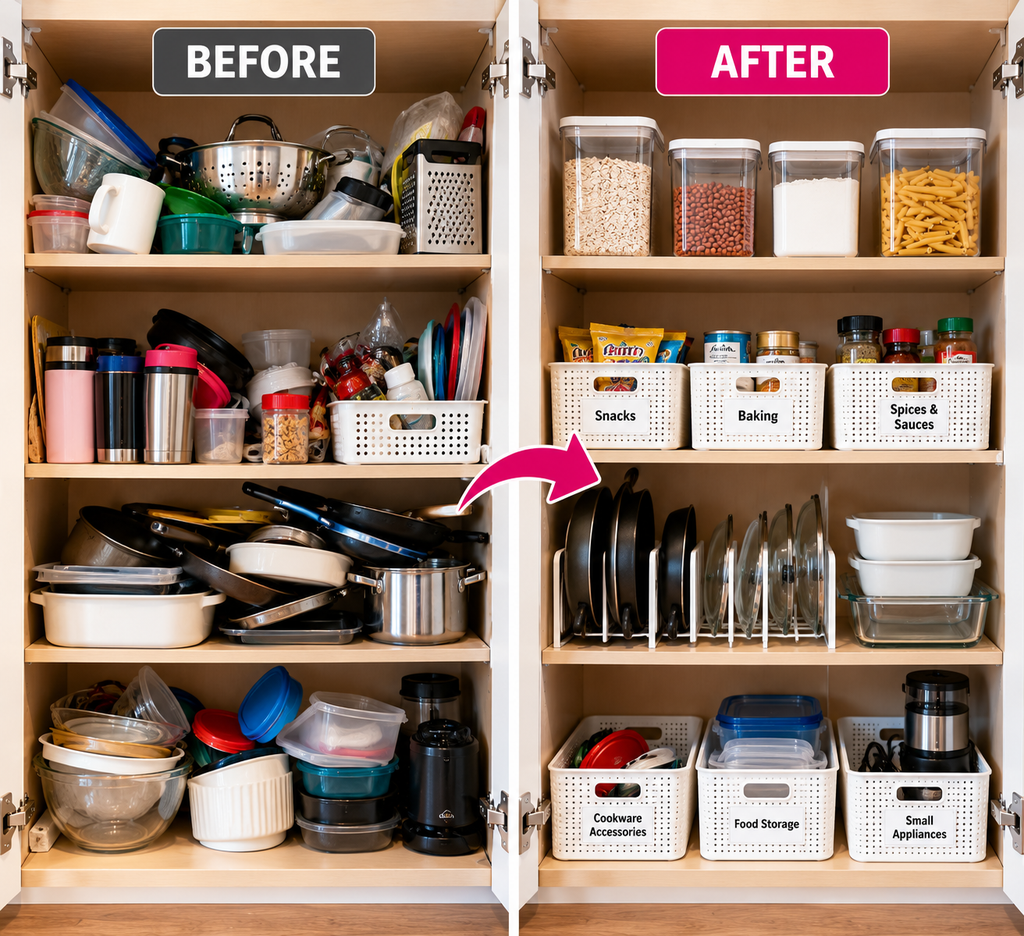
One of the biggest organization mistakes is buying containers before deciding what you actually need to keep.
Before organizing a crowded area, remove broken, unused, duplicated, or unwanted items.
The less you have to organize, the easier it becomes to maintain the space.
10. Use Drawer Dividers
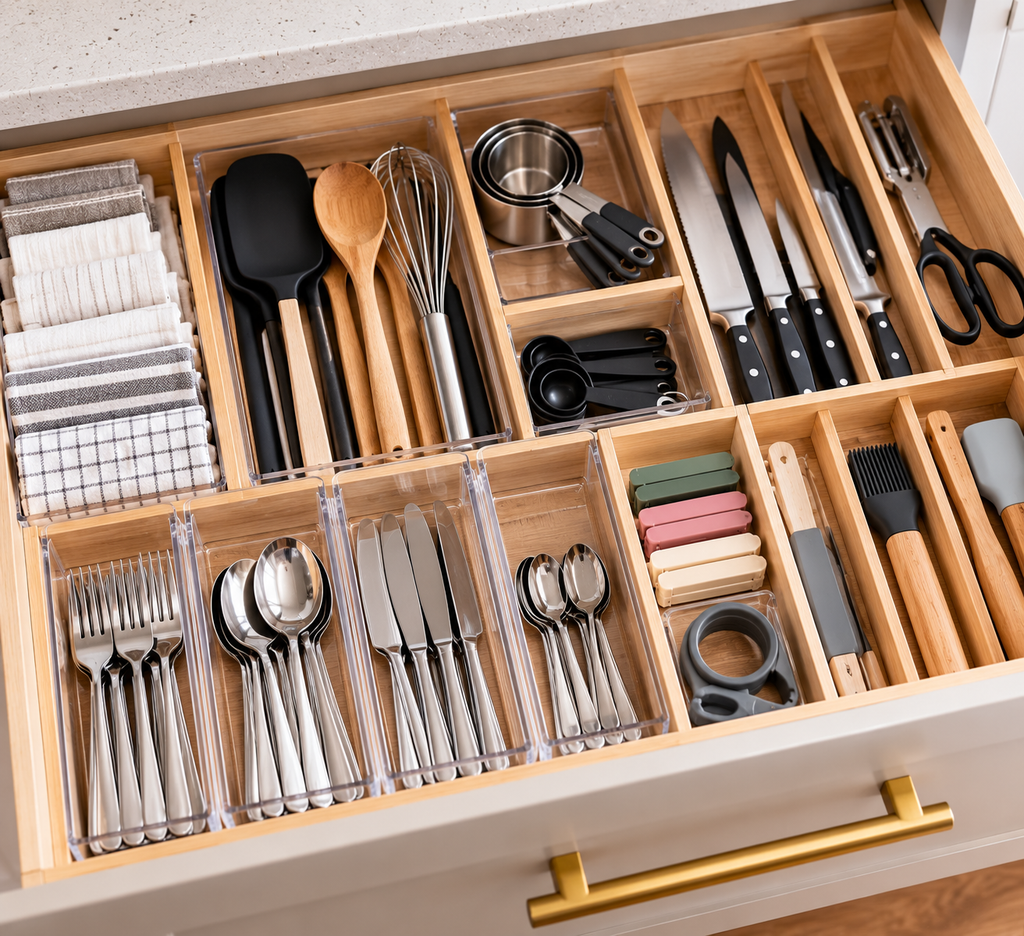
Small drawers can quickly become messy when everything is thrown together.
Drawer dividers can separate socks, underwear, accessories, kitchen utensils, makeup, office supplies, and other small items.
Adjustable dividers are particularly useful because you can change the layout as your needs change.
11. Give Every Frequently Used Item a Home
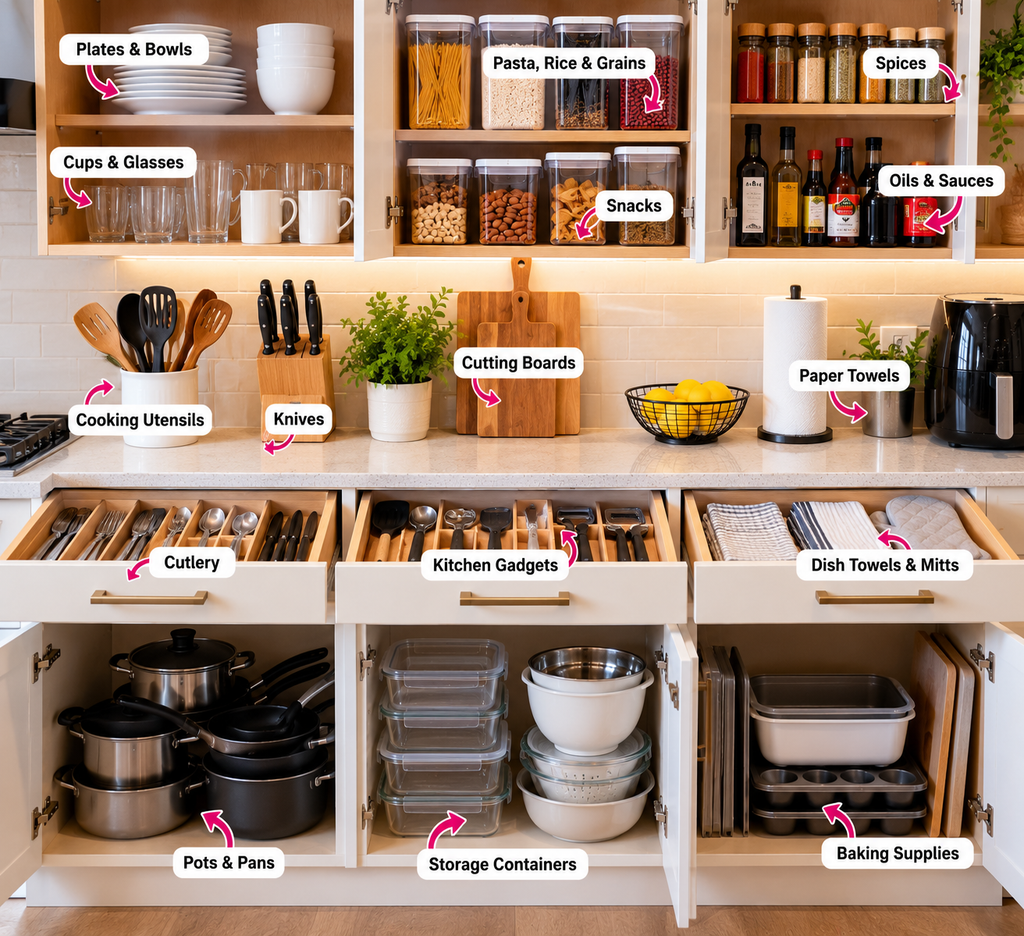
A simple rule can make organization much easier: everything you use regularly should have a designated place.
Instead of leaving items wherever you last used them, return them to their assigned location.
This small habit can prevent clutter from building up.
12. Install Hooks on Empty Walls
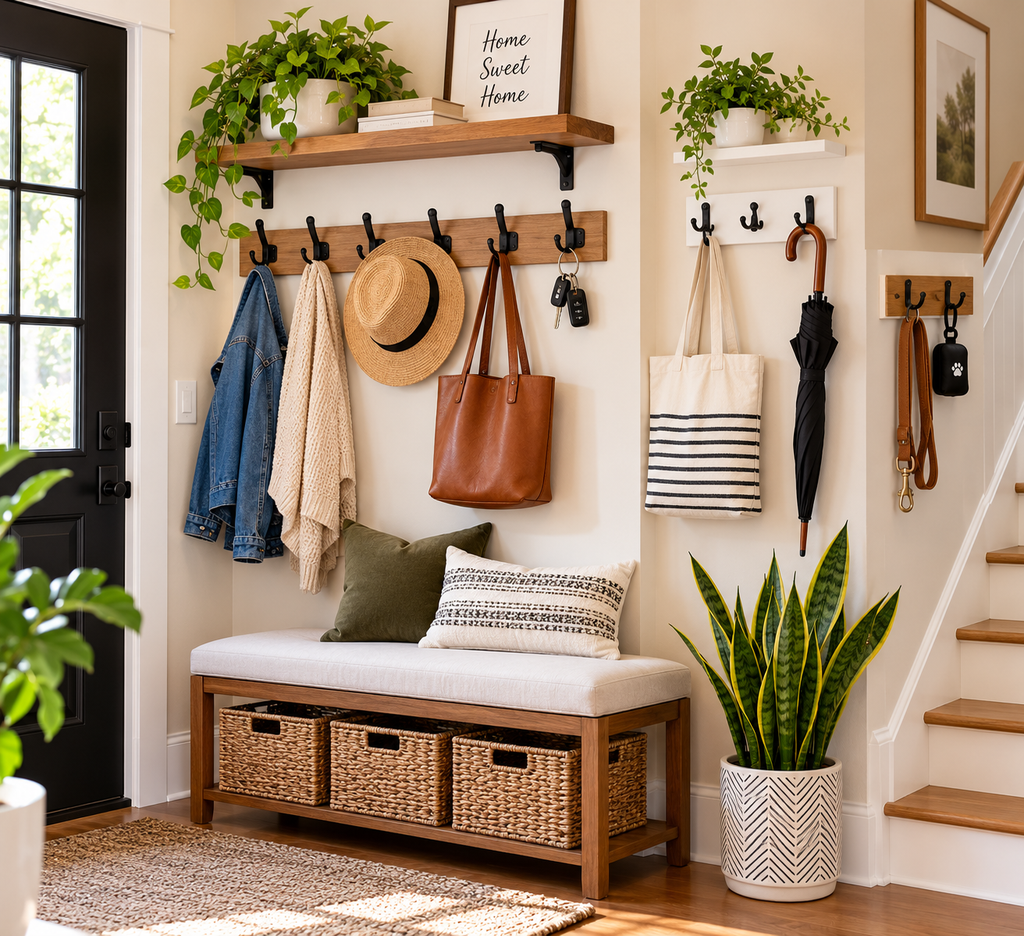
Hooks are inexpensive and take up very little space.
Use them for coats, hats, bags, towels, kitchen utensils, cleaning tools, or children’s belongings.
A row of hooks can turn an otherwise unused wall into functional storage.
13. Organize Your Bathroom With Bins
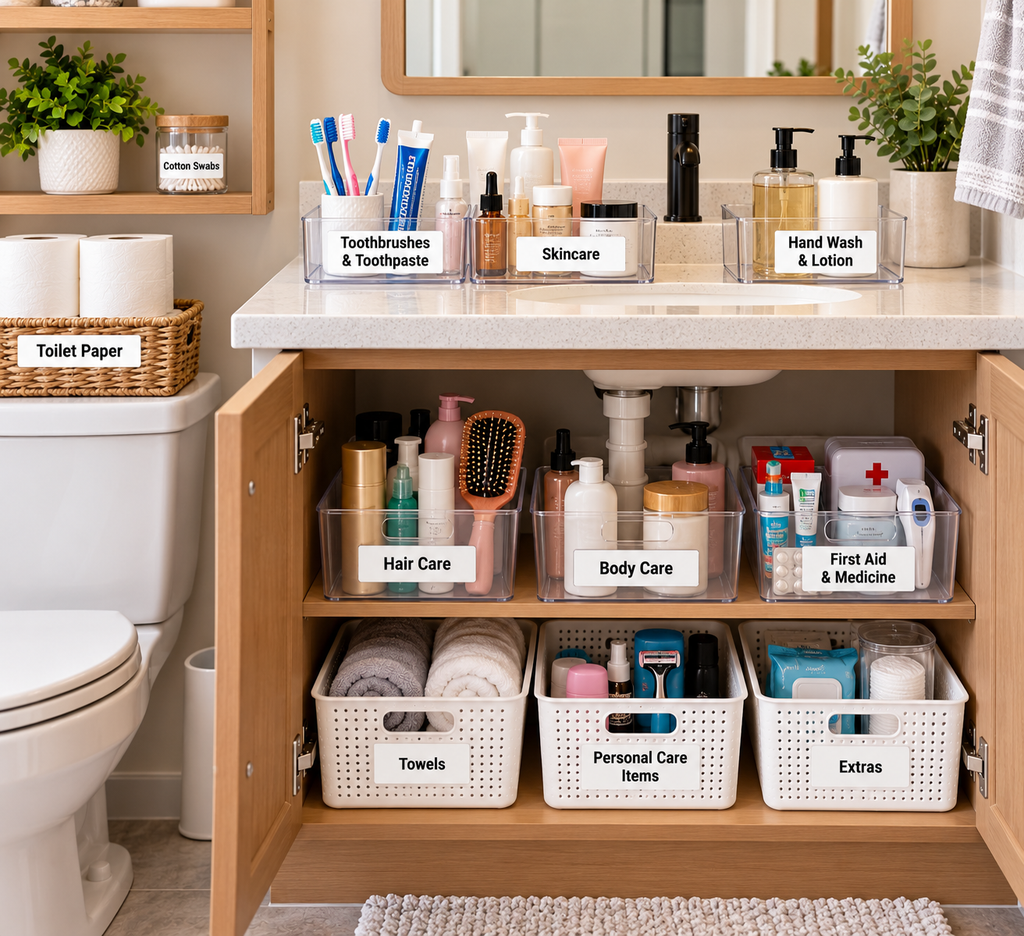
Small bathrooms often have more products than storage space.
Use small bins to group similar items together. For example, keep hair products in one bin, skincare products in another, and extra toiletries in another.
This also makes it easier to take everything out when cleaning.
14. Use the Side of Cabinets
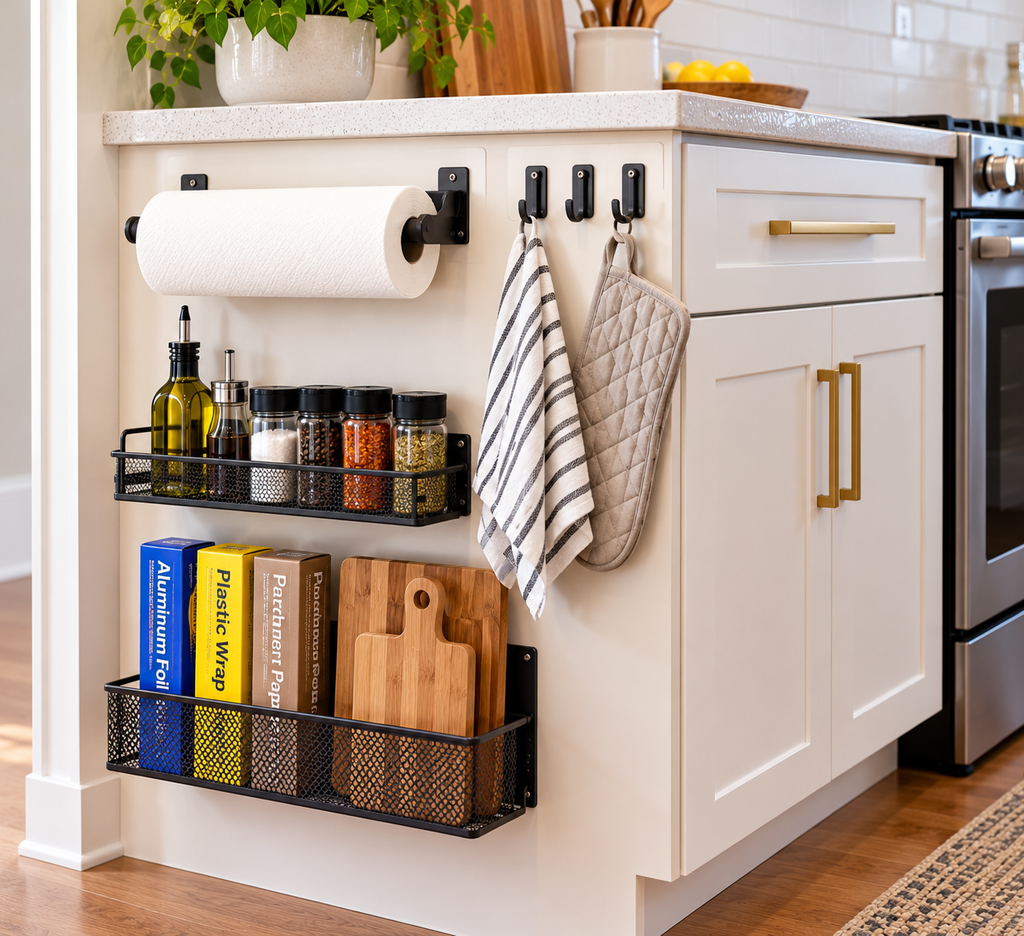
The side of a cabinet or refrigerator can sometimes become useful storage space.
Depending on the surface and location, you can add magnetic organizers, hooks, or slim storage solutions for items such as kitchen tools, notes, or frequently used supplies.
Just make sure anything you install is appropriate for the surface and doesn’t interfere with doors or appliances.
15. Keep a Basket for Items That Belong Elsewhere
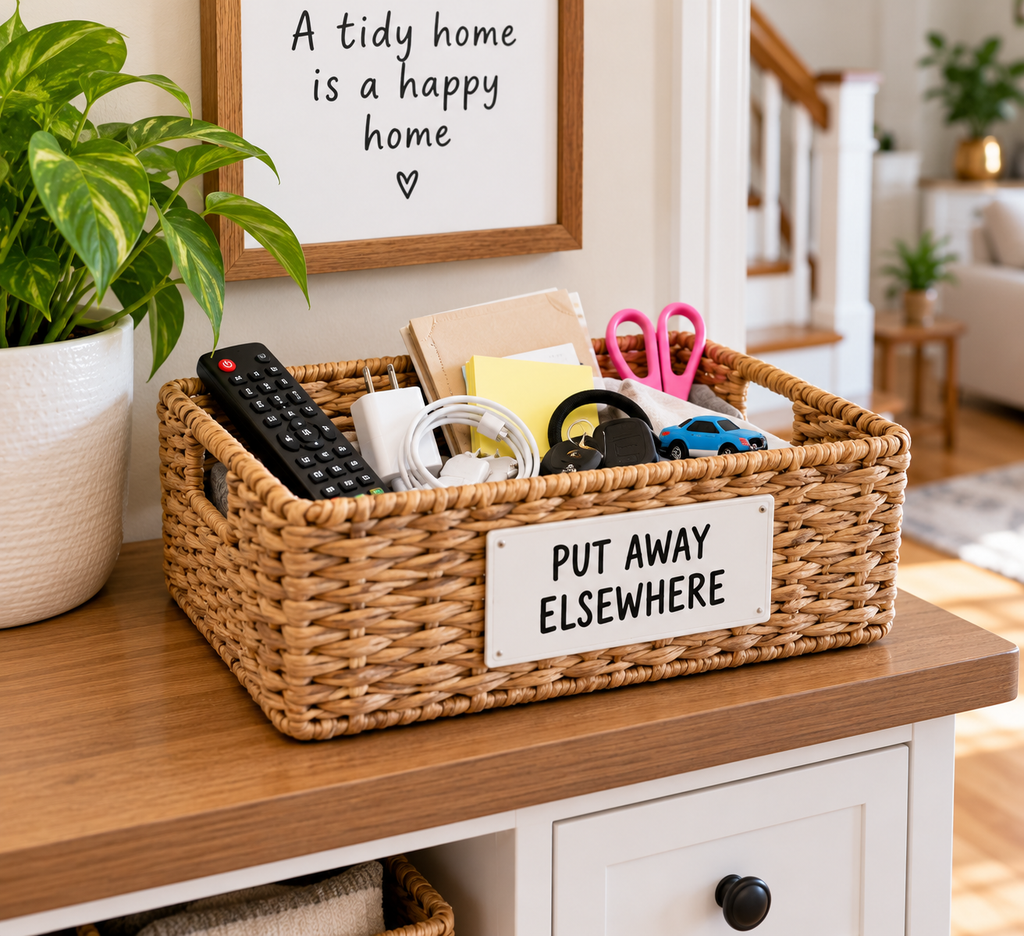
If items regularly migrate from one room to another, create a “return basket.”
Place misplaced items inside the basket throughout the day. At a convenient time, return everything to its proper room.
This is a simple way to keep surfaces from becoming dumping grounds.
16. Use Matching Storage Containers
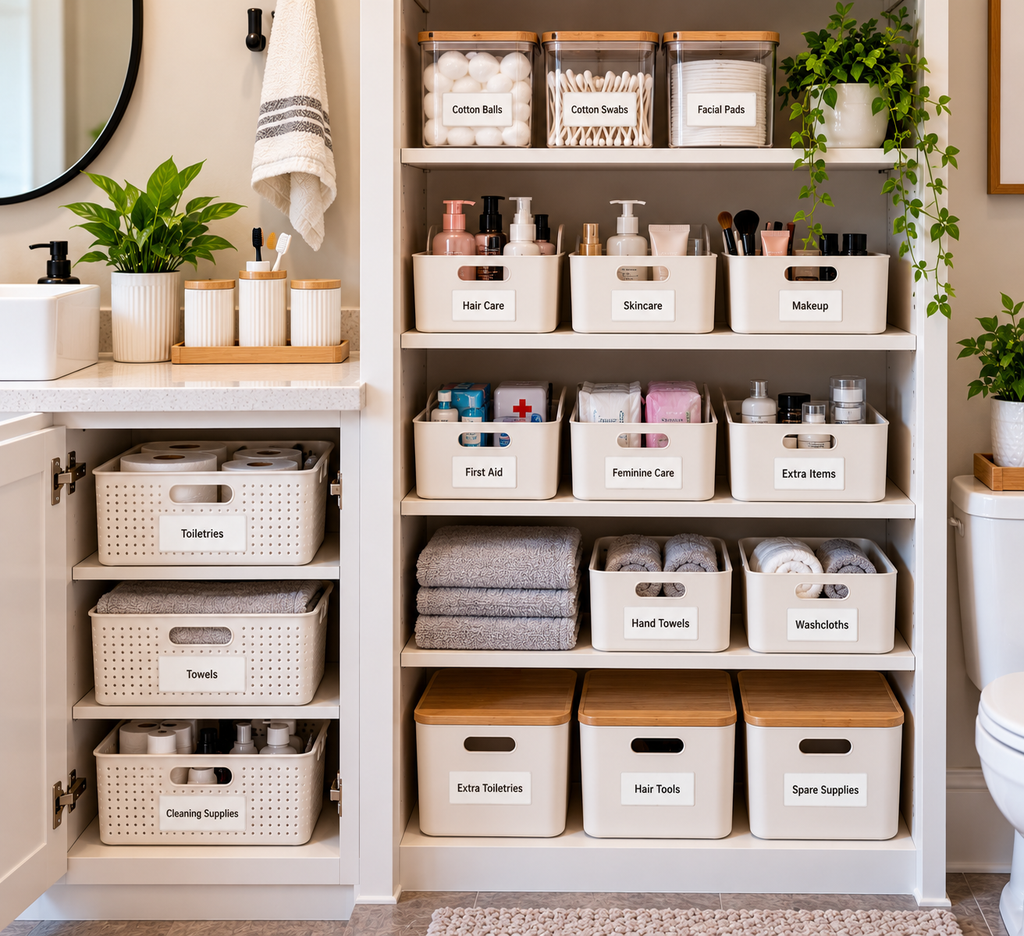
Matching containers can make even a small storage area look more organized.
They also make it easier to stack and arrange items efficiently.
You don’t need to replace everything at once. Start with the area that causes the most frustration and gradually create a consistent system.
17. Organize Your Closet by Category
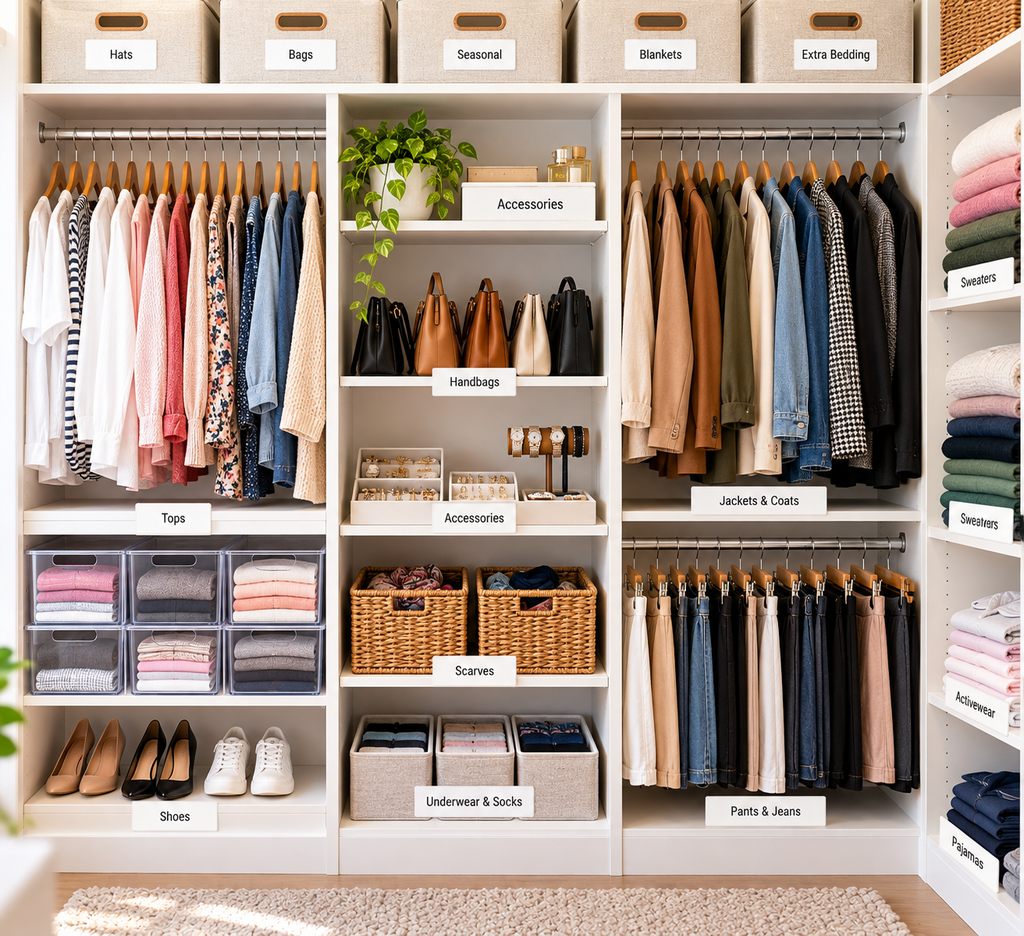
Instead of randomly hanging clothing, group similar items together.
For example:
- Tops
- Dresses
- Pants
- Jackets
- Workwear
- Occasion wear
You can also organize clothing by color within each category if that works for you.
18. Use a Small Basket on the Bathroom Counter

If your bathroom counter constantly becomes cluttered, use one attractive basket or tray for everyday essentials.
Keep only the products you regularly use there and store everything else away.
This creates a cleaner-looking countertop without requiring additional cabinetry.
19. Store Seasonal Items Elsewhere

You don’t need every item you own to be easily accessible all year.
Store seasonal clothing, holiday decorations, outdoor items, and other occasional-use belongings in labeled containers.
Use higher shelves, under-bed storage, closets, or other less accessible areas for these items.
20. Make Your Kitchen Counter Work Harder
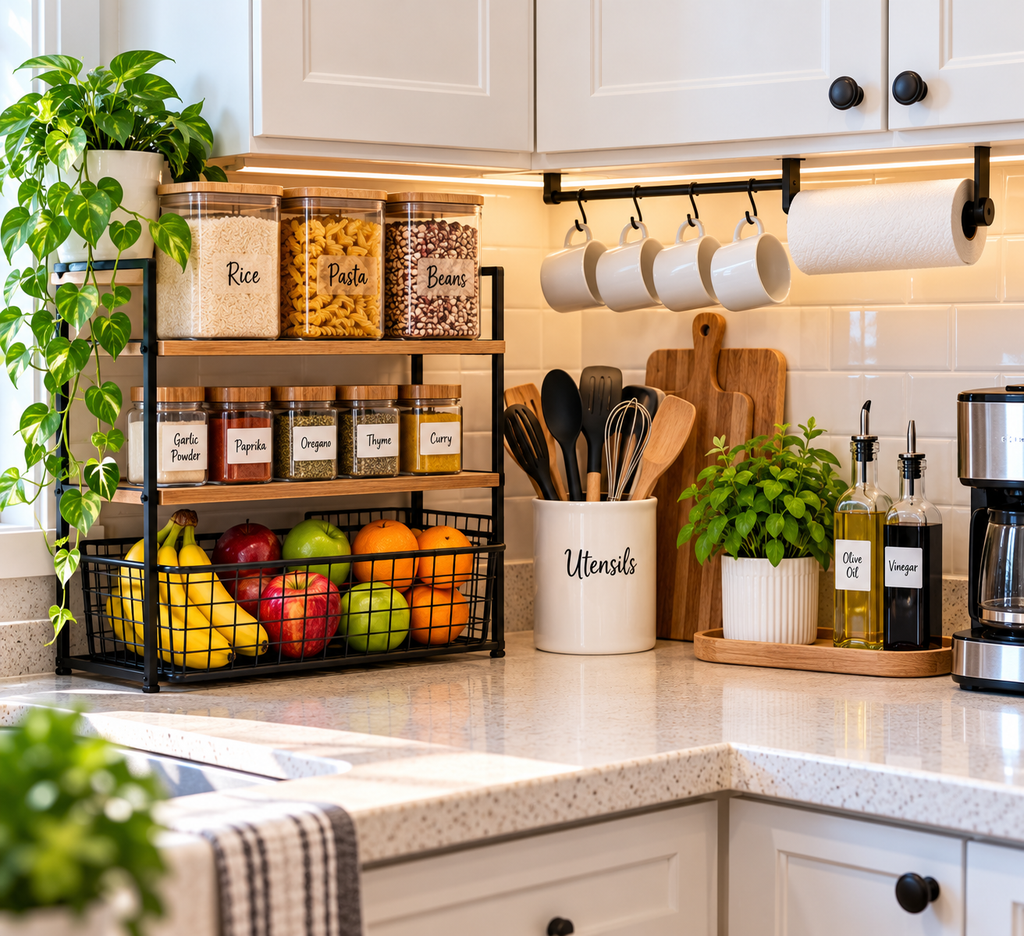
A small kitchen counter can become cluttered quickly.
Instead of keeping every appliance and tool on the countertop, decide which items deserve permanent space.
Frequently used items can stay accessible, while appliances used occasionally can be stored inside cabinets or a pantry.
21. Use Labels to Keep Systems Simple
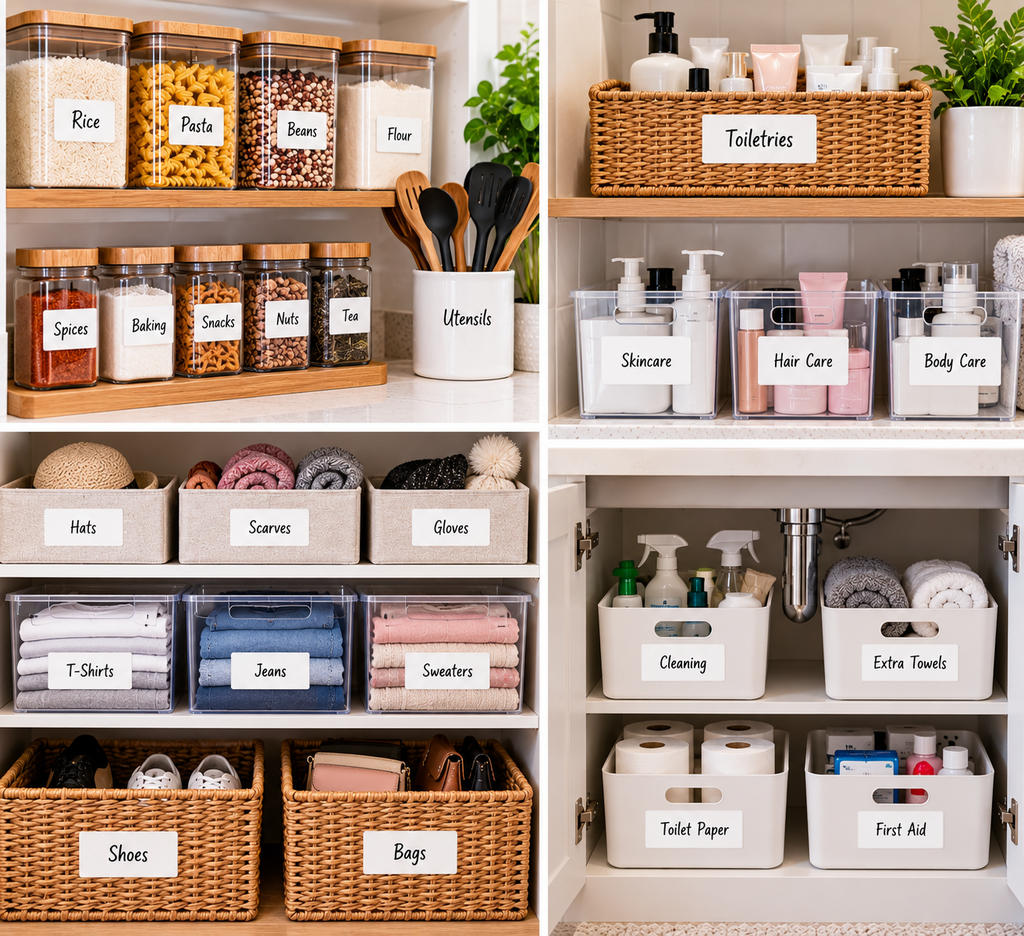
Labels are particularly useful when several people share a home.
Label bins, shelves, pantry containers, or drawers so everyone knows where things belong.
The goal isn’t to make your home look like a store. It’s to make putting things away easier.
22. Create a Dedicated Charging Station

Phones, tablets, watches, headphones, and chargers can quickly create messy piles.
Create one charging area where electronic devices can be plugged in and stored.
A small charging station can help keep cables organized and prevent devices from taking over countertops and tables.
23. Take Advantage of Corner Space
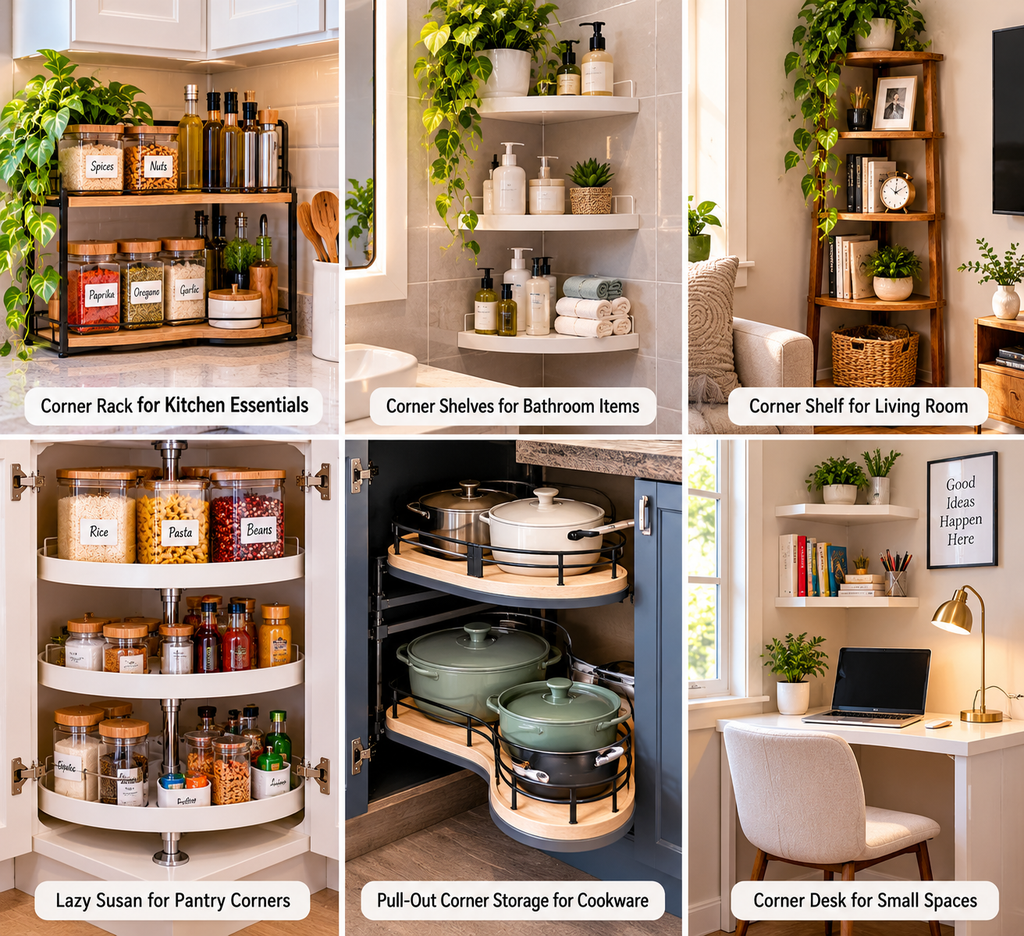
Corners are often wasted in small rooms.
Consider a corner shelf, narrow cabinet, tall plant stand, or other space-saving solution depending on the room.
Even an awkward corner can become useful with the right setup.
24. Rotate Children’s Toys
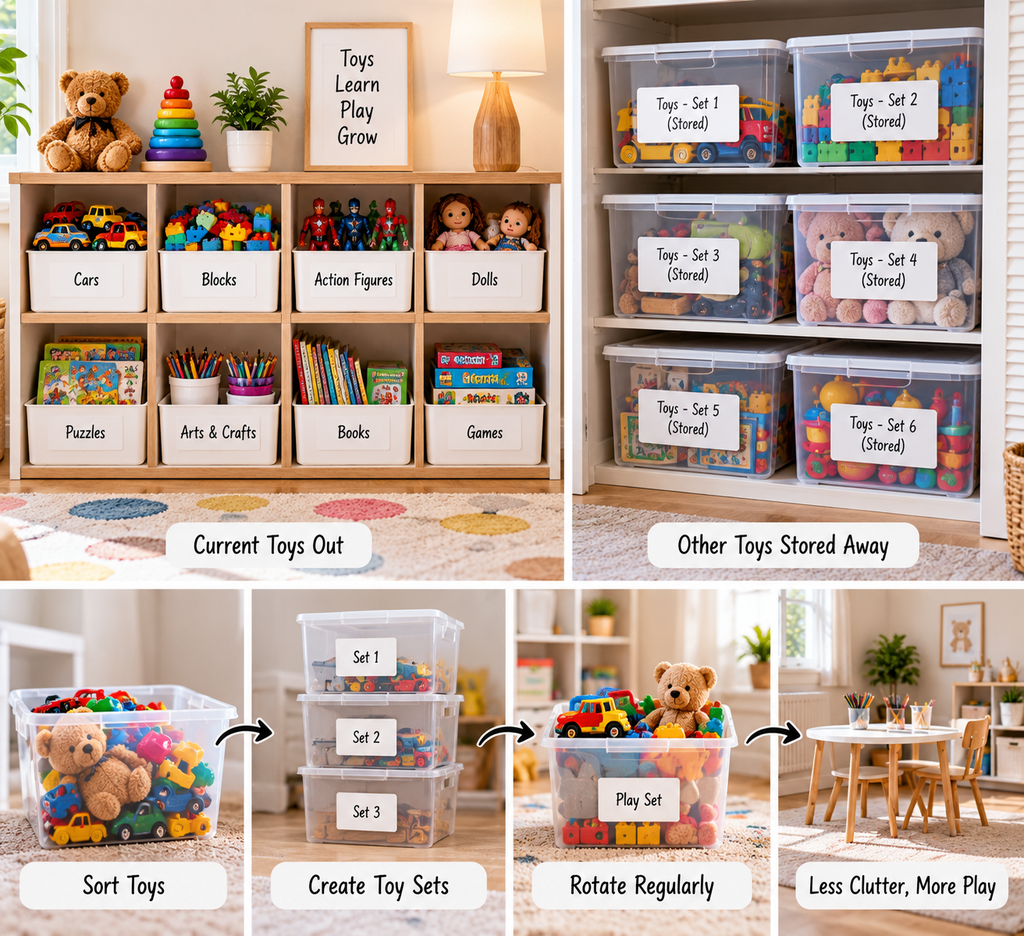
If you have children, keeping every toy accessible at once can quickly overwhelm a small room.
Try toy rotation instead.
Keep some toys stored away and bring out a smaller selection at a time. Rotate them periodically so the play area stays manageable.
25. Create a Simple Daily Reset
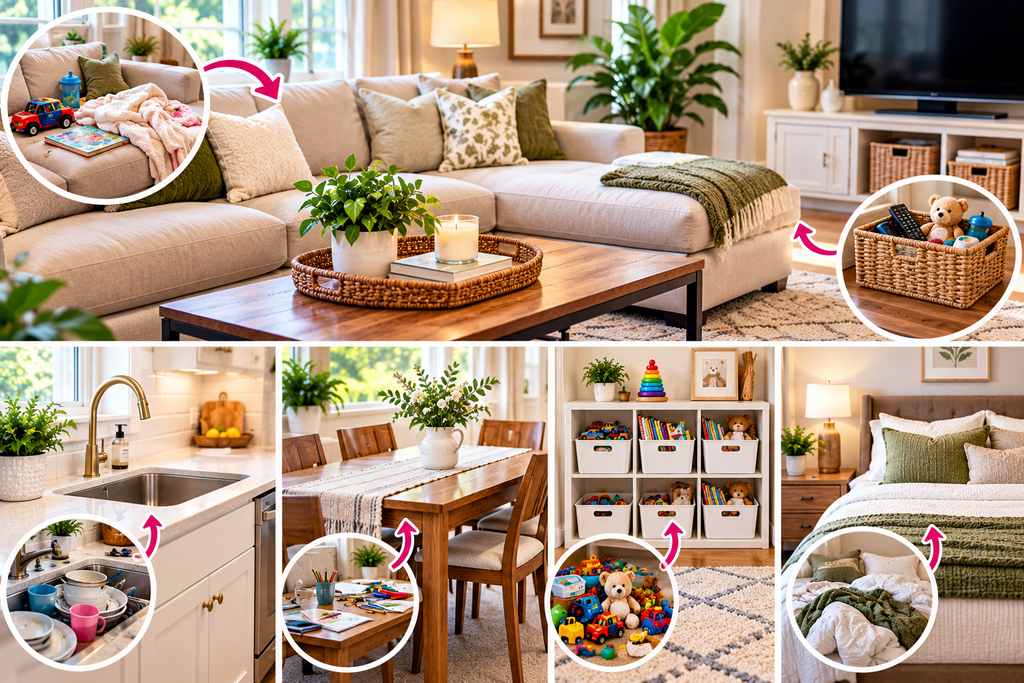
The most effective organization system is one you can maintain.
Spend 10–15 minutes at the end of the day returning items to their proper places, clearing countertops, putting away clothes, and preparing the home for the next day.
You don’t have to completely clean the house every night. A quick reset can make the next morning feel much easier.
How to Organize a Small Home Without Feeling Overwhelmed
You don’t have to organize your entire home in one weekend.
Start with the area that bothers you most. Remove things you no longer need, group similar items together, and then choose storage solutions based on what remains.
A useful approach is:
Declutter → Categorize → Assign a Home → Organize → Maintain
This prevents you from buying storage products that you don’t actually need.
Small Home Organization Mistakes to Avoid
Buying too many organizers
Storage products can become clutter themselves. Figure out what you need to store before purchasing containers and baskets.
Trying to organize everything at once
Tackling the entire house at once can quickly become overwhelming. Start with one drawer, shelf, cabinet, or room.
Ignoring how you actually use your home
An organization system should fit your daily habits. If something is used every day, it should be easy to access.
Keeping things because you might need them someday
Occasional-use items are fine, but too many “just in case” belongings can consume valuable storage space.
Creating systems that are too complicated
The best organization system is usually the one that takes very little effort to maintain.
Final Thoughts
A small home doesn’t have to feel cramped or chaotic.
By using vertical space, making better use of hidden areas, reducing unnecessary belongings, and giving everyday items a designated place, you can make your home feel much more functional.
Start small. Organize one problem area at a time, and choose solutions that fit the way your household actually lives.
The goal isn’t a perfectly organized home. It’s a home that works better for you every day.
